

A migraine can ruin a normal day fast. You wake up feeling okay, then the pressure starts building behind your eyes. Light feels too bright. Sounds feel sharp. Plans get canceled. Again.
If you are searching for botox for migraines in Clearwater, you are probably tired of temporary fixes. You want fewer migraine days, less disruption, and a treatment plan that actually helps you function.
Botox, also called onabotulinumtoxinA, is an FDA-approved preventive treatment for chronic migraine. It does not stop a migraine that has already started. Instead, it helps reduce migraine frequency over time. According to the Cleveland Clinic, chronic migraine involves headaches on 15 or more days per month, lasting 4 hours a day or longer.
At LUX Injectables in Clearwater, FL, treatment starts with a personalized consultation. Jessica Manges, ARNP, combines medical knowledge, advanced injectable training, and anatomy-based planning to create treatment plans tailored to each patient.
What You’ll Learn From This Article
By the end of this article, you’ll understand:
- What Botox for migraines actually does
- Who may qualify for treatment
- What research says about migraine Botox
- What happens during treatment
- When results may appear
- Possible side effects and risks
- How Botox compares to other migraine treatments
- How to prepare for your appointment
What Botox for Migraines Actually Means
For chronic migraine, providers inject Botox into specific muscles and nerve pathway areas around the head and neck. Before discussing results, it helps to understand what this treatment is actually designed to do.
Botox Is Preventive, Not Immediate Relief
Botox does not stop a migraine at the moment. It works gradually to help reduce the frequency of migraine attacks over time.
This treatment is intended for chronic migraine prevention, not occasional headaches.
Botox Targets Pain Signaling Pathways
Research suggests Botox may help calm pain signaling involved in migraine attacks. It affects certain chemicals linked to nerve communication.
Injection Areas Matter
Treatment often includes areas such as:
- Forehead
- Temples
- Back of the head
- Neck
- Upper shoulders
Proper placement matters because poor injection technique can affect comfort and results.
Who May Be a Candidate for Botox for Migraines

Not every headache patient needs Botox. Chronic migraine has specific diagnostic criteria.
A consultation helps determine whether treatment makes sense for your symptoms and medical history.
Chronic Migraine Definition
The International Classification of Headache Disorders defines chronic migraine as:
- Headaches on 15 or more days per month
- Lasting more than 3 months
- Migraine features on at least 8 days monthly
Signs You May Qualify
You may be evaluated for Botox if you:
- Miss work because of migraines
- Use rescue medication often
- Experience frequent migraine attacks
- Tried preventive medications without enough improvement
When Medical Evaluation Is Important
Some symptoms need immediate medical attention before considering Botox.
These include:
- Sudden severe headache
- Vision loss
- Weakness
- Confusion
- Fever
- Head injury
Botox should never replace a proper neurological evaluation.
What Research Says About Botox for Chronic Migraine
Botox for chronic migraine is backed by clinical research and FDA approval.
Patients often ask if the treatment actually works. The data is encouraging, but expectations should stay realistic.
FDA Approved for Chronic Migraine
The FDA-approved Botox for chronic migraine prevention in adults.
The label also states that safety and effectiveness have not been established for episodic migraine.
Research Shows Fewer Headache Days
The PREEMPT clinical trials found that Botox reduced headache frequency in adults with chronic migraine.
Results May Improve Over Multiple Cycles
Some patients notice improvement after the first cycle. Others respond after the second or third treatment cycle.
One long-term study found repeated treatment cycles remained effective and well-tolerated.
What to Expect During Your Consultation at LUX Injectables

A proper migraine consultation should feel detailed, not rushed.
You should leave understanding whether Botox may help and what realistic expectations look like.
Reviewing Your Migraine History
Your provider will ask about:
- Headache frequency
- Migraine symptoms
- Triggers
- Previous treatments
- Current medications
Tracking migraine days before your appointment really helps, honestly.
Anatomy-Based Treatment Planning
Jessica Manges, ARNP, evaluates facial and neck anatomy before treatment planning.
This helps improve placement accuracy and reduce unnecessary risks.
Clear Expectations Matter
Good providers explain:
- What Botox may improve
- What it may not improve
- How long will the results take
- Possible side effects
You should never feel pressured into treatment.
What Happens During the Botox Migraine Treatment
The procedure itself is usually quick and straightforward.
Most patients tolerate treatment well with minimal downtime.
Step-by-Step Treatment Process
Treatment usually includes:
- Cleansing the skin
- Mapping injection sites
- Injecting small amounts of Botox
- Reviewing aftercare instructions
Common Injection Areas
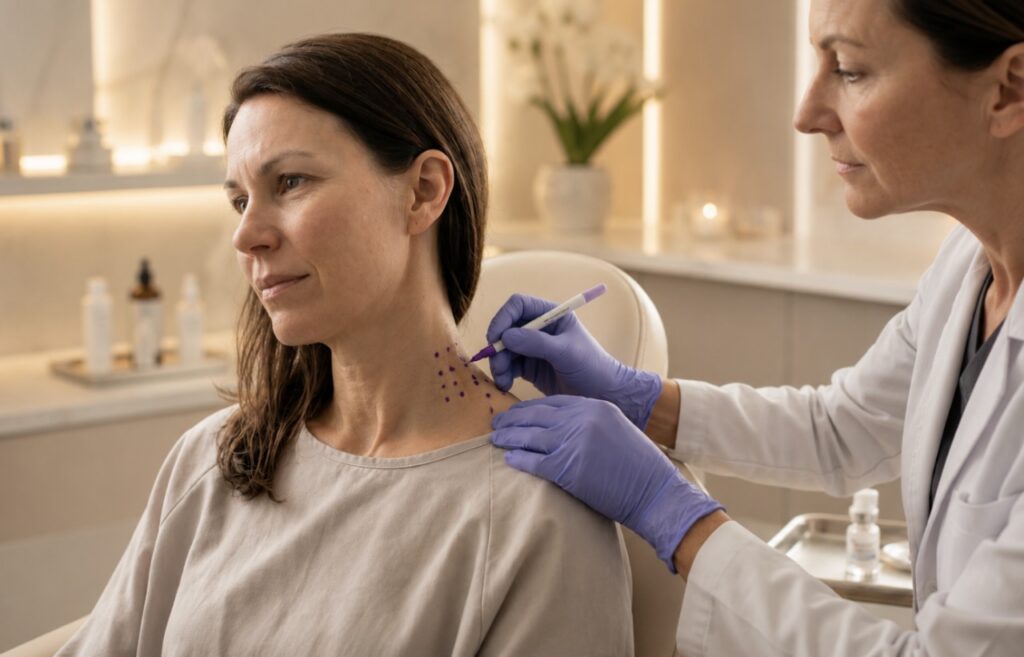
Providers may inject:
- Forehead muscles
- Temples
- Back of scalp
- Neck muscles
- Upper trapezius muscles
What the Botox Injections Feel Like
Most patients describe the injections as quick pinches.
Mild tenderness or tightness afterward can happen, but serious downtime is uncommon.
When Results May Start and How Long They May Last
Results take time, and Botox is not instant migraine relief. Knowing the timeline ahead of time can help prevent frustration. Some patients notice improvement within a few weeks, while others may need multiple treatment cycles before changes become obvious. Most patients repeat treatment every 12 weeks, although your provider may adjust the timing based on your response and medical history.
Tracking Progress Matters
Keeping a migraine diary helps track improvement more accurately.
| What to Track | Why It Matters |
| Headache days per month | Shows whether frequency is improving |
| Migraine days per month | Helps separate migraine from other headaches |
| Pain severity | Shows whether attacks feel less intense |
| Rescue medication use | Helps identify medication patterns |
| Missed work or activities | Measures real-life improvement |
| Triggers | Helps guide lifestyle and medical planning |
What Results Can Patients Realistically Expect
Botox does not cure migraines. The goal is fewer migraine days and better daily function.
Results vary from person to person.
Common Improvements Patients Notice
Many patients report:
- Fewer migraine attacks
- Less severe symptoms
- Better response to medication
- Improved daily functioning
Results Depend on Several Factors
Outcomes may vary based on:
- Stress
- Sleep
- Hormones
- Medication overuse
- Other health conditions
- Treatment consistency
A realistic goal is more manageable migraines, not perfection.
Possible Side Effects and Safety Considerations
Most side effects are temporary, but patients should still understand the risks before treatment.
Safety starts with proper screening and an experienced injection technique.
Common Side Effects
Reported side effects may include:
- Neck pain
- Headache
- Injection site soreness
- Muscle weakness
- Eyelid drooping
Rare But Serious Risks
Seek medical attention if you experience:
- Trouble breathing
- Trouble swallowing
- Severe weakness
- Sudden neurological symptoms
These reactions are rare, but they require urgent evaluation.
Important Medical History to Share
Tell your provider if you:
- Are pregnant or breastfeeding
- Have neuromuscular disorders
- Recently had another neurotoxin treatment
Botox for Migraines vs. Other Migraine Treatment Options
Migraine treatment usually includes rescue treatments and preventive treatments. Botox falls into the preventive category.
| Treatment Option | Treatment Option | How It Works | When It Is Used | Important Notes |
| Botox | Preventive treatment | Helps reduce migraine frequency over time | Chronic migration prevention | Results improve gradually |
| Rescue Medications | Immediate symptom relief | Treats active migraine symptoms | Taken during a migraine attack | Does not prevent migraines |
| CGRP Targeted Therapies | Preventive treatment | Blocks migraine-related CGRP pathways | Migraine prevention | FDA-approved preventive option |
| Combination Treatment | Combined migraine management | Uses multiple migraine therapies together | Severe or persistent migraine cases | Require medical supervision |
Why Choose LUX Injectables in Clearwater for Botox Migraine Treatment
Experience matters with injectable treatments, especially when treating chronic migraine.
LUX Injectables focuses on personalized care and detailed consultations.
Advanced Injectable Experience
Jessica Manges, ARNP, has over a decade of experience in dermatology and aesthetic medicine.
She has also trained professionals nationally and internationally.
Individualized Treatment Plans
No two migraine patients are exactly alike. Treatment planning should reflect your symptoms, anatomy, and treatment goals.
Education and Communication
Patients should understand:
- Treatment expectations
- Risks
- Timeline
- Follow-up planning
Clear communication builds trust and better decision-making.
Preparing for Your Appointment
Preparation helps your provider develop a safer, more accurate treatment plan. Small details can make a difference.
Bring Migraine Tracking Information

Write down:
- Number of migraine days
- Headache severity
- Medication use
- Common triggers
Bring Your Medication List
Include:
- Prescription medications
- Supplements
- Pain relievers
- Blood thinners
- Previous neurotoxin treatments
Ask Questions During Your Consultation
Helpful questions include:
- Am I a good candidate for botox for migraines?
- How many treatment cycles should I try?
- What side effects should I expect?
- Should I continue my migraine medications?
FAQs
1. Is botox for migraines in Clearwater the same as cosmetic Botox?
The medication may be the same, but the treatment plan is different. Cosmetic Botox targets facial expression lines. Botox for migraines targets specific head and neck areas used in chronic migraine prevention.
2. How many Botox treatments for migraine treatments are needed before results appear?
Some patients notice improvement after the first cycle. Others need two or three cycles before results become clear. Studies on repeated onabotulinumtoxinA treatment cycles support continued assessment across multiple cycles for chronic migraine.
3. How long does Botox for migraines last?
Many chronic migraine protocols repeat treatment about every 12 weeks. Your provider will recommend the right timing based on your response, safety profile, and medical history.
4. Does Botox for migraines hurt during treatment?
Most patients describe the injections as quick pinches. You may feel mild soreness or tenderness afterward, but significant downtime is not common.
5. Can I still take migraine medication after Botox for migraines?
Often, yes. Botox is preventive, while many migraine medications treat attacks after they start. Always tell your provider what you take so they can help you avoid unsafe overlap or medication overuse.
Conclusion – Botox for Migraines May Help Reduce Chronic Migraine Burden
Botox for migraines may help reduce headache frequency and improve daily function for adults with chronic migraine. It is not an instant fix, and it works best when paired with realistic expectations and consistent follow-up care.
At LUX Injectables in Clearwater, FL, treatment begins with a personalized consultation and anatomy-based planning. If migraines keep interrupting your life, scheduling a consultation may help you understand whether Botox is an appropriate option for you.

Jessica Manges, ARNP, is the founder and lead injector at LUX Injectables in Clearwater, Florida. With over a decade of experience in dermatology and aesthetic medicine, she specializes in PDO threads, neurotoxins, dermal fillers, and personalized treatment planning. Jessica has treated thousands of patients and has trained aesthetic professionals nationally and internationally.