
Under-eye hollows can make the face look tired even when you feel rested. Concealer may help with discoloration, but it cannot change a visible depression beneath the lower eyelid.
For the right candidate, dermal fillers for under eyes may soften that hollow and create a smoother transition between the lower eyelid and cheek. The key is understanding what is actually causing the concern. Tear trough hollowing, pigmentation, thin skin, visible blood vessels, and lower eyelid bags can all create a tired appearance, but they do not respond to the same treatment.
At LUX Injectables in Clearwater, FL, under-eye treatment begins with careful facial assessment. Jessica Manges, ARNP, evaluates the eye area in relation to the cheeks and the rest of the face so the treatment plan fits your features rather than a standard formula.
What You’ll Learn From This Article
- What under-eye filler can realistically improve
- How tear trough hollowing differs from other types of dark circles
- What to expect during treatment and recovery
- Why subtle filler placement matters around the lower eyelid
- Which risks and limitations deserve careful consideration
- How injector experience affects treatment planning in this delicate area
What Are Dermal Fillers for Under Eyes?
Under-eye filler is an injectable treatment that adds carefully placed volume beneath the eyes. It is most often considered when the tear trough creates a noticeable depression between the lower eyelid and upper cheek.
Understanding the Tear Trough
The tear trough is the natural groove that begins near the inner corner of the eye and follows the lower eyelid. Some people have a visible hollow from a young age because of their facial anatomy. For others, the area becomes more pronounced as they lose volume and structural support over time.
A deeper trough can create a shadow that makes the under-eye area appear darker. Research on tear trough correction also notes that lower eyelid anatomy, skin quality, pigmentation, fat position, and soft tissue volume can all affect how the area looks.
That distinction matters because a dark circle does not automatically mean the skin itself is darker.
How Hyaluronic Acid Filler Works
Many eye filler treatments use hyaluronic acid filler. Hyaluronic acid is a substance naturally present in the body and is also used in several injectable dermal filler products.
When placed appropriately, filler may add support to a sunken area and soften the visual break between the lower eyelid and cheek. The intention is usually not to make the area look full. It is to create a smoother contour without adding unnecessary volume.
The under-eye area is delicate, so choosing the right patient and treatment plan matters before the first injection. That brings us to the most important question: whether filler can actually help.
What Under-Eye Concerns Can Filler Improve?
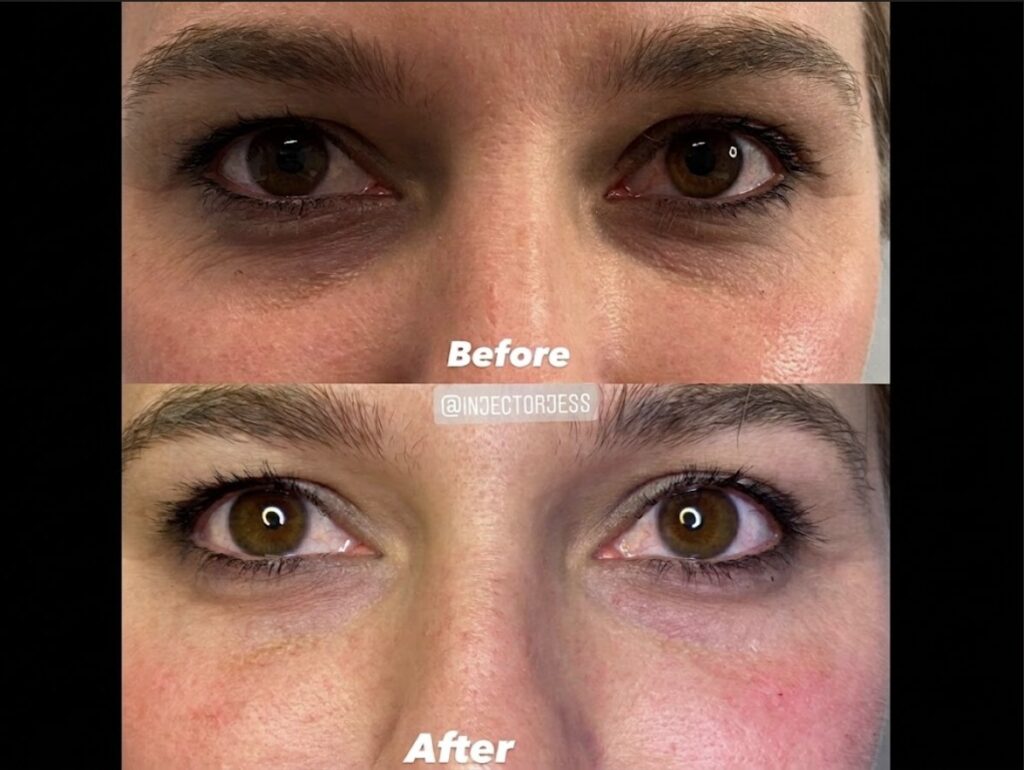
Not every dark circle or lower eyelid concern comes from the same source. A good consultation separates structural hollowing from skin and pigment concerns before recommending treatment.
Hollow or Sunken Under Eyes
Eye filler may be considered when you have:
- A visible tear trough
- Hollowing between the lower eyelid and cheek
- Loss of volume beneath the eyes
- Shadowing caused by a sunken contour
- A noticeable break between the lower eyelid and upper cheek
In suitable patients, adding a conservative amount of filler may soften the depression and make the area look less hollow.
Dark Circles Caused by Shadowing
Some dark circles look darker because of the way light falls across a tear trough.
If the darkness is primarily a shadow created by hollowing, filling part of that depression may reduce the shadow. The improvement comes from changing the contour, not the skin color.
Concerns Filler May Not Correct
Filler is less likely to address an under-eye concern when the main cause is:
- Brown or gray pigmentation
- Very thin skin
- Prominent blood vessels
- Significant lower eyelid bags
- Persistent puffiness
- Loose skin
- Fine wrinkles without meaningful volume loss
This difference is important when setting expectations.
| Under Eye Concern | Can Filler Help? | Why |
| Defined tear trough hollow | Often may help in suitable candidates | Filler can replace selected volume |
| Shadow from hollowing | Possibly | Reducing the depth of the hollow may reduce shadowing |
| Pigmentation | Usually not directly | Filler does not remove skin pigment |
| Prominent lower eyelid bags | May not be ideal | Added volume can sometimes make puffiness more noticeable |
| Thin skin or visible vessels | Limited | These are not primarily volume problems |
| Fine lines or loose skin | Limited | A skin-focused treatment may be more appropriate |
Once the cause of the concern is clear, candidacy becomes much easier to assess.
Who Is a Good Candidate for Under Eye Filler?
Age alone does not define a good candidate. Facial anatomy, skin quality, medical history, previous filler, and the type of under-eye concern all affect whether treatment makes sense.
Characteristics of a Potential Candidate
Consider under-eye filler when you have a well-defined tear trough, visible hollowing, and enough skin support to accommodate additional volume.
Realistic expectations also matter. Filler may soften a hollow, but it will not erase every line, remove all pigmentation, or completely change the lower eyelid’s structure.
Clinical guidance on hyaluronic acid treatment of the tear trough emphasizes careful patient assessment, product selection, anatomy, and treatment technique.
When Another Approach May Be Better
Filler may not be the best first option if you have significant eye bags, pronounced skin laxity, persistent fluid retention, or dark circles caused mainly by pigmentation.
Your provider may also recommend a different plan if cheek support is contributing to the appearance of the under-eye area.
This is where facial balancing matters. Treating one hollow without considering the midface can sometimes create a result that feels disconnected from the rest of the face.
At LUX Injectables, Jessica evaluates those relationships before deciding where filler should or shouldn’t go. The consultation is designed to determine what fits your face, not to make filler the answer to every concern.
What Happens During an Under Eye Filler Appointment at LUX Injectables?

Under-eye treatment should feel deliberate from the start. Product choice, placement, and the amount used depend on your facial structure and treatment goals.
Consultation and Facial Assessment
Your consultation may include an evaluation of:
- Tear trough depth
- Cheek support
- Lower eyelid anatomy
- Skin quality
- Puffiness or under-eye bags
- Pigmentation
- Facial symmetry
- Previous injectable treatments
This is also the time to talk about what you notice when you look in the mirror or in photos. Some patients are concerned about darkness, while others are bothered by hollowing or the transition between the eye and cheek.
The consultation helps separate those concerns so the treatment plan can be more precise.
Choosing the Right Dermal Filler
Not every hyaluronic acid filler behaves the same way.
Products differ in texture, flexibility, firmness, and how they interact with surrounding tissue. Those properties influence where and how a filler may be used.
Juvederm is one well-known family of hyaluronic acid fillers, but the name of a filler alone does not determine whether it is appropriate around the eye. Product choice should depend on the treatment area, anatomy, and provider assessment.
During the Injection
Before treatment, the skin is cleansed, and the injection sites are assessed. Numbing may be used depending on the treatment plan and product.
Your injector then places filler according to the planned correction while checking contour and symmetry throughout the appointment.
Small changes often matter more than large amounts in this area. The skin around the lower eyelid is thin, and excessive filler may make the area look heavy or puffy.
Once treatment is complete, attention shifts from the injection itself to what the area may look and feel like as it settles.
What Results Can Under Eye Filler Create?
The goal of under eye filler is usually subtle. In a well-selected patient, the result may make the lower eyelid and cheek look more connected without making the face look noticeably filled.
A Smoother Lower Eyelid to Cheek Transition
Under eye filler may:
- Soften a defined tear trough
- Reduce shadowing caused by hollowing
- Make a sunken area appear less pronounced
- Create a smoother transition into the cheek
- Make the eye area look less tired in appropriate candidates
A published expert consensus on tear trough treatment discusses the role of hyaluronic acid fillers in correcting infraorbital hollowing while emphasizing patient selection, anatomy, and careful treatment planning.
Why Subtle Correction Matters
The under-eye area is not one where more product automatically means a better result.
Too much filler may make the lower eyelid look swollen or heavy. Conservative treatment can be especially important for someone who wants a polished result that still looks like their own face.
In some cases, an injector may choose to treat in stages rather than attempting a larger correction in one appointment.
How Long Does Under Eye Filler Last?
How long filler lasts depends on several factors, including the product used, your anatomy, the amount placed, your metabolism, and your treatment plan.
No single timeframe applies to every filler or every patient.
Longevity is only one part of deciding whether treatment is worthwhile. For most patients, the more immediate concern is how the area heals during the first several days.
Swelling, Bruising, and Under-Eye Filler Recovery
Under-eye filler does not involve surgical recovery, but that doesn’t mean the area will look completely settled as soon as you leave the appointment.
Common Short-Term Effects
Temporary effects may include:
- Swelling
- Bruising
- Redness
- Tenderness
- Sensitivity around the injection site
- Mild temporary asymmetry as swelling settles
The amount of swelling or bruising varies by person.
Planning Around Photos, Travel, and Events
If you have a wedding, vacation, professional photos, or another important event coming up, leave enough time between treatment and the date.
Some people have minimal visible swelling. Others need longer for bruising or puffiness to settle.
That is especially relevant for LUX clients who may be preparing for events, travel, content shoots, or other occasions where they want to feel photo-ready.
Follow Up Matters
It is usually better to evaluate the final contour after early swelling has improved than to judge the result immediately.
A follow-up appointment lets the injector reassess symmetry, contour, and whether the area needs more time or additional treatment.
Recovery is usually the first part of the conversation after treatment, but safety deserves its own discussion because of the anatomy around the eye.
Is Under Eye Filler Safe?
Dermal filler is a medical procedure. Most treatment-related effects are temporary, but complications can occur.
Common Cosmetic Concerns
Possible effects include bruising, swelling, unevenness, tenderness, persistent puffiness, nodules, or visible filler.
When hyaluronic acid filler sits too close to the surface, a bluish appearance called the Tyndall effect can sometimes occur.
The lower eyelid may also be more sensitive to swelling because of the way fluid moves through this area.
Vascular Complications and Vision Risk
A rare but serious complication can occur if filler enters or blocks a blood vessel.
Vascular complications may cause tissue injury. Facial filler injections have also been associated with rare reports of vision impairment and blindness.
These risks should not be used to frighten patients, but they should not be minimized either. The eye area requires detailed anatomical knowledge, appropriate product selection, careful injection technique, and the ability to recognize and manage complications.
Why Injector Experience Matters
Under-eye filler is widely considered a technically demanding injectable treatment.
An experienced provider should look beyond the visible hollow. Cheek structure, skin quality, lower eyelid anatomy, previous filler, and the pattern of volume loss can all change the treatment plan.
Jessica Manges, ARNP, has more than a decade of experience in dermatology and aesthetic medicine and has treated thousands of patients. She has also trained aesthetic professionals nationally and internationally and has been nominated as a Top 100 Injector in America.
That background supports LUX’s approach to injectable treatment, which combines medical knowledge with attention to proportion, contour, and facial balance.
The same assessment can also show when filler isn’t the most appropriate solution.
Under Eye Filler vs Other Treatments for Dark Circles
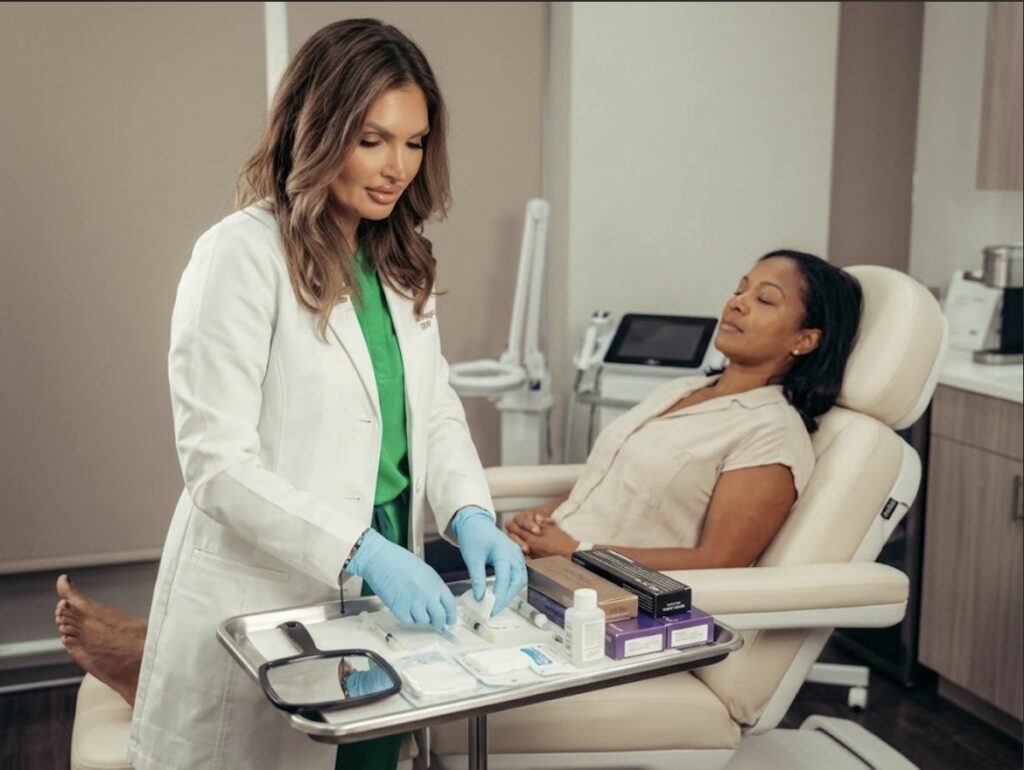
Under-eye filler is best thought of as a treatment for selected structural concerns, not a general treatment for everything that can make the eyes look tired.
If a true hollow is creating the shadow, filler may be worth considering.
If the concern comes mainly from pigmentation, thin skin, surface wrinkles, skin laxity, visible vessels, or prominent lower eyelid bags, another treatment may make more sense.
Some patients also benefit from looking beyond the under-eye itself. Cheek volume and midface structure can influence how deep the tear trough appears. Addressing facial balance may sometimes create a more natural result than placing filler directly into every hollow.
LUX’s treatment philosophy is built around that type of individualized planning. The goal is to choose the treatment that supports your features rather than forcing every concern into the same injectable solution.
That approach matters especially when choosing where to get a precise treatment like under-eye filler.
Why Choose LUX Injectables for Under-Eye Filler in Clearwater, FL?
LUX Injectables is a boutique med spa in Clearwater created for clients who care about technique, detail, and aesthetic judgment.
Jessica Manges, ARNP, brings more than a decade of experience in dermatology and aesthetic medicine to each treatment plan. Her work includes dermal fillers, PDO threads, neurotoxins, facial balancing, and combination treatments.
At LUX, the consultation is not simply about choosing how much filler to inject.
It is an opportunity to review your facial proportions, discuss what you want to change, and decide which approach best fits those goals. If filler is appropriate, the plan can focus on careful correction rather than unnecessary volume. If another treatment makes more sense, that conversation matters just as much.
For patients comparing injectors in Clearwater and the Tampa Bay area, the difference often comes down to more than the product. Technique, visual judgment, experience, and a clear understanding of your aesthetic preferences all matter.
Those same considerations answer many of the questions people have before scheduling a consultation.
Frequently Asked Questions About Dermal Fillers for Under Eyes
1. Can dermal fillers for under eyes get rid of dark circles?
They may improve dark circles when the darkness comes mainly from shadowing created by a tear trough hollow.
Filler does not directly remove pigmentation or visible blood vessels. If your dark circles come from one of those causes, a different treatment may be more appropriate.
2. How long do dermal fillers for under eyes last?
Duration varies by filler product, your anatomy, metabolism, amount used, and treatment plan.
Your injector can give you a more relevant estimate after evaluating the area and deciding which product is appropriate.
3. Does under-eye filler hurt?
You may feel pressure, a pinch, or temporary sensitivity during the injection. Providers may use numbing techniques to improve comfort.
The experience varies from person to person, so it is more accurate to expect some sensation than to assume the treatment will be painless.
4. How much swelling or bruising should I expect after eye filler?
Temporary swelling and bruising can occur after filler treatment.
Some patients have very little visible downtime, while others need several days for the area to look more settled. If you have an important event coming up, discuss timing with your provider before scheduling.
5. Who should not get tear trough filler?
Under-eye filler may not be appropriate if you have significant eye bags, severe skin laxity, an active infection, certain medical concerns, or primarily pigment-based dark circles.
Make the decision after an in-person assessment, not from photos or online advice alone.
Is Under Eye Filler Right for Your Facial Anatomy?
Dermal fillers for under eyes may be a good option when a true tear trough hollow or volume loss creates the appearance you want to soften. They are not designed to correct every dark circle, wrinkle, or change around the lower eyelid.
A thoughtful treatment plan considers your skin, pigmentation, cheek support, eye anatomy, existing puffiness, previous cosmetic treatments, and the result you want to see.
At LUX Injectables in Clearwater, FL, Jessica Manges considers the full picture before recommending treatment.
If you are considering under-eye filler, schedule a free consultation with LUX Injectables to meet with Jessica, discuss your aesthetic goals, and find out whether a personalized injectable plan is right for you.

Jessica Manges, ARNP, is the founder and lead injector at LUX Injectables in Clearwater, Florida. With over a decade of experience in dermatology and aesthetic medicine, she specializes in PDO threads, neurotoxins, dermal fillers, and personalized treatment planning. Jessica has treated thousands of patients and has trained aesthetic professionals nationally and internationally.