

What You’ll Learn From This Article
-
- How jawline filler may soften the appearance of mild jowls
-
- What realistic before and after results can look like
-
- Who may be a good candidate for treatment
-
- How filler compares with PDO threads, Sculptra, and skin tightening
-
- What to expect during treatment and recovery
-
- Why injector experience matters for lower face contouring
What Causes Jowls and a Less Defined Jawline?
Jowls develop when the tissues along the lower face begin to lose support. This may create a small dip beside the chin, a heavier area near the corners of the mouth, or a less distinct line between the face and neck.
Several changes can contribute to jowling:
-
- Loss of facial volume
-
- Reduced collagen and elastin
-
- Changes in facial fat
-
- Skin laxity
-
- Natural bone structure
-
- Genetics
-
- Sun exposure
-
- Weight changes
-
- Limited chin projection
The American Society of Plastic Surgeons explains that aging can involve loss of facial fat, skin stretching, and changes in facial volume. These shifts may affect the cheeks, chin, jawline, and lower face.
The visible jowl is often only one part of the concern. A hollow area in front of it, called the prejowl sulcus, may make the sagging tissue look more prominent. A small or recessed chin can also make the jawline appear shorter and less defined.
This is why a thoughtful treatment plan looks beyond the jowl itself. The next step is understanding how filler can support the surrounding areas without making the lower face look heavy.
How Jawline Filler Can Improve the Appearance of Jowls
Jawline filler adds controlled volume beneath the skin. Many dermal fillers contain hyaluronic acid, a substance that naturally occurs in the body and helps attract moisture.
When an injector treats mild jowling, the filler may be placed in several connected areas rather than directly into the sagging tissue. These may include:
-
- The prejowl hollow
-
- The border of the jawline
-
- The jaw angle near the ear
-
- The chin
-
- Areas of lower face asymmetry
Filler in the prejowl area may help create a straighter line from the chin to the jaw. Chin filler may improve projection and make the lower face look more balanced. Jaw angle filler can add shape farther back, depending on your facial structure and goals.
Jawline Support Versus Excess Volume
The best result does not always come from adding more filler.
Too much product can widen the lower face, make jowling look heavier, or create a jawline that does not match the chin and cheeks. Precise placement matters more than volume alone.
A skilled injector looks at the face from the front, profile, and three-quarter view. The treatment should support the areas that need structure while preserving natural movement and proportion.
Once the treatment strategy is clear, before-and-after photos can help show what those changes may look like in real patients.
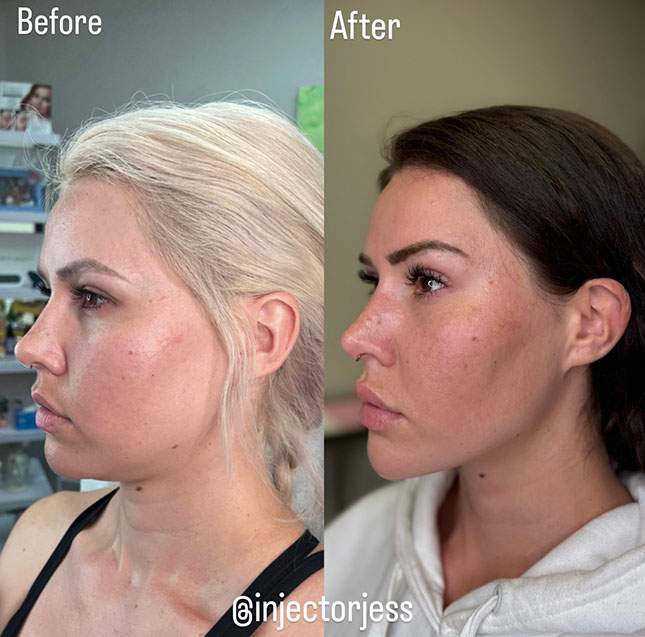
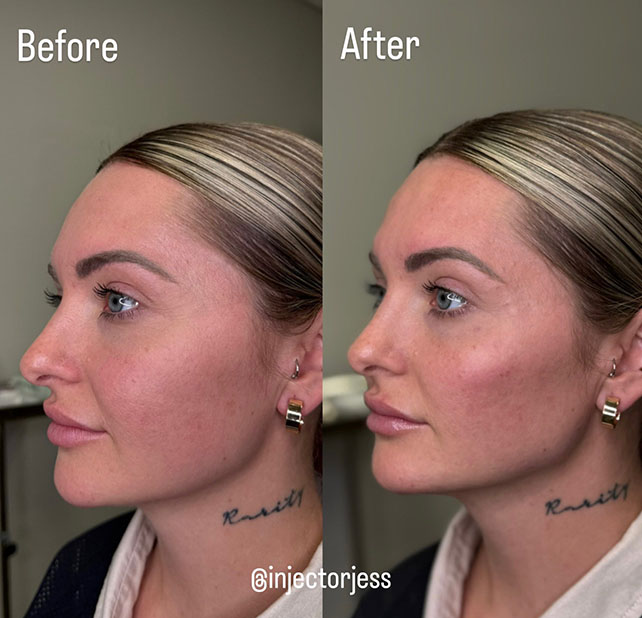
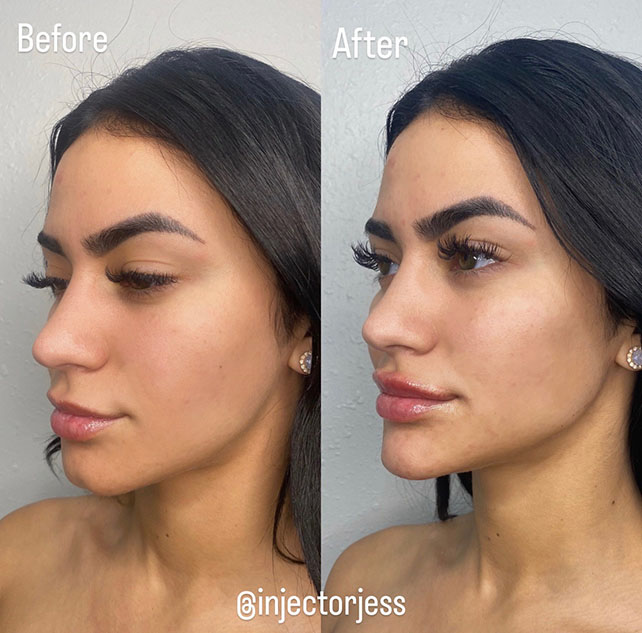
What Jawline Filler Before and After Results May Look Like
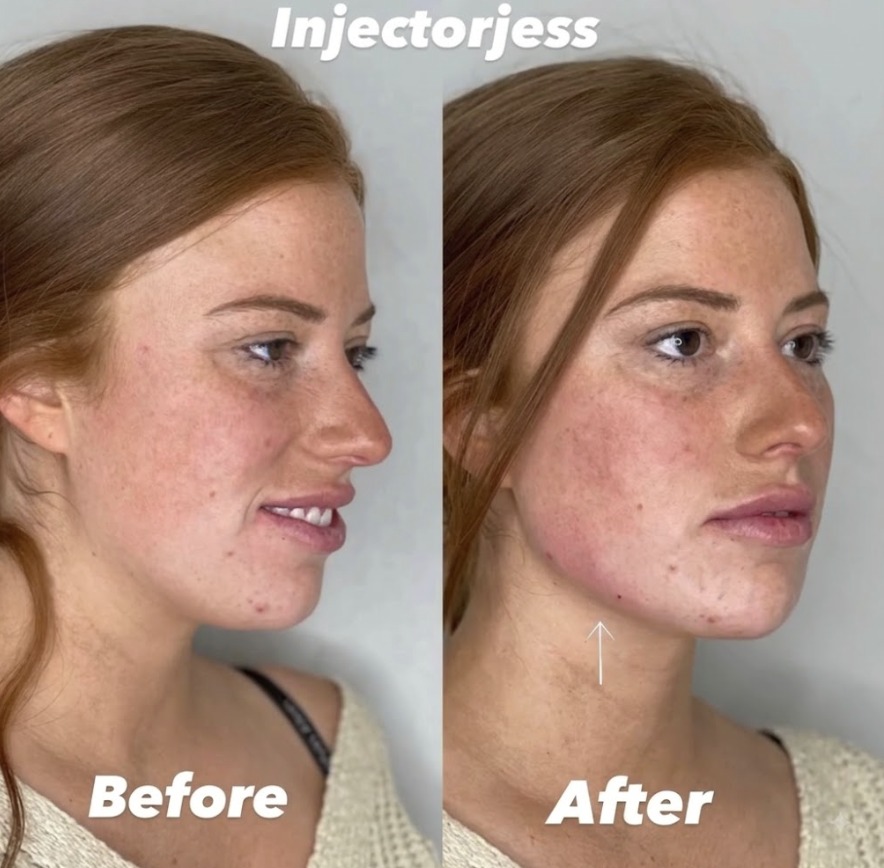
Before-and-after photos are among the best ways to understand an injector’s style. They can show how treatment affects the jawline from different angles and whether the result looks balanced with the rest of the face.
Depending on your anatomy and treatment plan, results may include:
-
- A straighter jawline
-
- Less visible hollowing in front of the jowl
-
- Better chin and jawline balance
-
- Improved lower face symmetry
-
- A more defined profile
-
- A smoother transition from the jaw to the neck
-
- Less shadowing around mild jowling
-
- A more sculpted appearance in photos
Results vary by person. A patient in her late 20s who wants stronger facial balancing may need a different approach than someone in her 40s with skin laxity, volume loss, and early jowling.
Swelling can also affect the first impression. The jawline may appear fuller immediately after injection, so the final result should be assessed once the initial tenderness and swelling have subsided.
What to Look for in Before and After Photos
Compare photos that use similar lighting, camera distance, facial expression, and head position. Small changes in angle can make the jawline appear sharper or softer.
Look for consistency across several patients, not just one dramatic transformation. A polished result should not create excessive width, obvious lumps, uneven contours, or a jawline that looks disconnected from the chin.
Before-and-after photos are helpful, but candidacy matters just as much. The next section explains who may respond well to jawline filler and who may need another approach.
Who Is a Good Candidate for Jawline Filler for Jowls?
Jawline filler may be suitable when mild jowling is related to reduced support, a visible prejowl hollow, limited chin projection, or loss of definition along the jaw.
Potential candidates may have:
-
- Mild or early jowling
-
- A dip beside the chin
-
- Reduced jawline definition
-
- Mild facial volume loss
-
- Lower face asymmetry
-
- A small or recessed chin
-
- Realistic expectations
-
- A preference for a nonsurgical treatment
Filler may not be the best choice when significant sagging skin, advanced neck laxity, or substantial tissue descent causes concern. Adding dermal filler to an already heavy lower face may create more fullness instead of a cleaner contour.
Your medical history also matters. The injector should review previous fillers, medications, allergies, active skin conditions, and any health concerns that may affect treatment.
A good consultation may reveal that filler is only one part of the answer. Comparing it with other options can make the decision much clearer.
Jawline Filler, PDO Threads, Sculptra, or Skin Tightening?
Different treatments address different causes of jowling. The right choice depends on whether the concern comes mainly from volume loss, tissue descent, collagen loss, or loose skin.
| Treatment | Main purpose | May be considered for | Main limitation |
| Hyaluronic acid jawline filler | Adds structure and shapes contours | Mild jowling, prejowl hollowing, reduced jaw definition | Does not remove significant loose skin |
| PDO threads | Repositions selected tissue and may support collagen production | Mild tissue descent in suitable candidates | Results depend on anatomy, technique, and tissue quality |
| Sculptra | Stimulates gradual collagen production | Diffuse volume loss and broader facial support | Does not create the same immediate definition as a structural filler |
| Skin tightening treatments | Encourage collagen remodeling and tissue contraction | Mild laxity and skin quality concerns | May not restore missing volume |
| Facelift or neck lift | Surgically repositions tissue and removes excess skin | Moderate to advanced laxity | Requires surgery and a longer recovery |
Jawline filler adds structure. PDO threads may help reposition selected tissue. Sculptra works more gradually by stimulating collagen. Treatments such as Morpheus8, Sylfirm X, NeoGen Plasma, and other skin-tightening options may help achieve firmer-looking skin in appropriate candidates.
Some patients benefit from a combination plan. For example, filler may support the chin and prejowl area while a collagen-focused treatment addresses skin quality. Other patients may need threads instead of additional volume.
The consultation should identify the role of each treatment before any injections are given. That same planning continues during the appointment itself.
What Happens During a Jawline Filler Appointment at LUX?
Jawline filler at LUX begins with a detailed facial assessment. The consultation allows time to review your goals, previous treatments, facial anatomy, and concerns about pain, swelling, downtime, or looking unnatural.
Facial Assessment and Custom Planning
Your injector may assess:
-
- Chin projection
-
- Prejowl hollowing
-
- Jaw angle definition
-
- Facial width
-
- Symmetry
-
- Cheek support
-
- Skin thickness
-
- Tissue laxity
-
- The relationship between the jawline and neck
You may bring inspiration photos, but the treatment plan should fit your own features. An image can help explain the look you like, but it cannot predict an identical result.
LUX is owned by Jessica Manges, ARNP, who has more than a decade of experience in dermatology and aesthetic medicine. She has treated thousands of patients, trained aesthetic professionals both nationally and internationally, and been recognized as a Top 100 Injector nominee.
Her approach combines technical skill with medical artistry. Depending on your needs, the plan may include dermal filler alone or a broader approach involving chin augmentation, PDO threads, Radiesse, mono threads, or skin tightening.
Precise Injection and Immediate Review
Before treatment, the skin is cleansed, and the injector may mark key anatomical points. Comfort measures may be used based on the product and technique.
Filler is then injected into selected areas. Your injector may pause during the procedure to check symmetry and contour from different views.
You may notice an immediate change, but swelling can temporarily affect the shape. Clear aftercare instructions help protect the treated area while it settles.
Knowing what happens after the appointment can also help you choose the right timing for treatment.
Recovery, Swelling, and When Results Settle
Jawline filler typically involves less downtime than surgery, but temporary reactions are common.
You may experience:
-
- Swelling
-
- Tenderness
-
- Bruising
-
- Firmness
-
- Redness
-
- Mild discomfort
-
- Temporary lumps or bumps
-
- Itching or discoloration at injection points
The amount of swelling varies. Product choice, injection technique, treatment volume, and your individual response all play a role.
Many patients return to normal daily activities quickly, but bruising or swelling may affect photos and social plans. It is wise to avoid scheduling treatment immediately before a wedding, vacation, professional photo shoot, or major event.
Your provider may recommend limiting strenuous exercise, excessive heat, prolonged sun exposure, and alcohol for a short period after treatment. Do not massage or press the area unless your injector tells you to.
A smooth recovery also depends on choosing a provider who explains normal side effects, warning signs, and treatment limitations before the injection begins.
Safety, Limitations, and Choosing an Experienced Injector

Dermal filler is a medical procedure. A beautiful clinic and polished portfolio matter, but they do not replace clinical training, anatomical knowledge, or a clear plan for managing complications.
Product type, injection depth, placement, and volume can affect both safety and appearance. Before treatment, tell your provider about:
-
- Previous filler
-
- Allergies
-
- Prescription medications
-
- Blood-thinning medications
-
- Autoimmune conditions
-
- History of excessive scarring
-
- Current skin infections or inflammation
-
- Recent dental work
-
- Planned laser or chemical peel treatments
-
- Pregnancy or breastfeeding
Treatment may need to be postponed if there is an active infection, rash, sore, or inflammatory skin condition near the injection site.
Common reactions such as swelling, bruising, tenderness, and firmness often improve with time. Rare complications can be serious. Accidental injection into a blood vessel can restrict blood flow and may cause tissue injury, vision changes, stroke, or other permanent harm.
Seek prompt medical attention for severe or worsening pain, skin color changes, unusual vision symptoms, or other concerning reactions after treatment.
Questions to Ask Before Booking
A qualified injector should be comfortable answering questions such as:
-
- How often do you treat the jawline and lower face?
-
- Can I see results from patients with similar anatomy?
-
- Which filler do you recommend, and why?
-
- Could filler make my lower face look heavier?
-
- Should I consider PDO threads or skin tightening instead?
-
- How do you identify and manage complications?
-
- What downtime should I expect?
-
- When should I schedule a follow-up?
The answers should help you feel informed, not pressured. They also prepare you for the practical questions many patients ask before booking.
Frequently Asked Questions About Jawline Filler for Jowls
1. Can jawline filler get rid of jowls?
Jawline filler may soften the appearance of mild jowls by supporting the prejowl area, improving chin projection, or creating a straighter lower face contour. It does not remove excess skin or fully correct advanced tissue descent.
2. How much jawline filler for jowls is usually needed?
There is no standard amount for every patient. The volume depends on facial width, chin projection, asymmetry, existing filler, product choice, and the degree of jowling. Some patients may benefit from a staged approach rather than completing the entire plan in one visit.
3. How long does jawline filler last?
Results are temporary. Longevity varies based on the filler used, injection location, metabolism, movement, and treatment plan. Your injector can explain the expected duration of the recommended product.
4. Is jawline filler better than PDO threads for jowls?
Neither treatment is better for everyone. Filler adds structure and restores volume. PDO threads may help reposition selected tissue in suitable candidates. The best option depends on the cause of the jowling and the quality of the skin.
5. When should I schedule jawline filler before an event?
Allow enough time for consultation, treatment, swelling, bruising, settling, and a possible follow-up. Since recovery varies, discuss your event date with your injector before scheduling.
Create a Jawline Plan That Fits Your Face
Jawline filler for jowls may create a smoother, more defined lower face when mild volume loss or limited structural support contributes to the concern. The strongest results come from careful product selection, precise placement, and a clear understanding of what filler can and cannot do.
At LUX Injectables, the goal is not to add volume without purpose. Jessica evaluates the chin, cheeks, jawline, skin quality, and overall facial balance before creating a custom plan.
Schedule a free consultation with LUX Injectables in Clearwater to discuss your aesthetic goals and find out whether jawline filler, PDO threads, skin tightening, or another approach may be right for you.

Jessica Manges, ARNP, is the founder and lead injector at LUX Injectables in Clearwater, Florida. With over a decade of experience in dermatology and aesthetic medicine, she specializes in PDO threads, neurotoxins, dermal fillers, and personalized treatment planning. Jessica has treated thousands of patients and has trained aesthetic professionals nationally and internationally.