
Fine lines can start to show even when your skincare routine hasn’t changed. Makeup may settle differently, sun damage may look more noticeable, and the skin can lose some of the smoothness it once had.
Laser skin resurfacing for wrinkles may help improve these concerns by treating damaged skin and supporting collagen renewal. The treatment can soften certain lines, improve uneven skin texture, and create a fresher appearance. Results depend on the laser type, treatment depth, your skin tone, and the cause of the wrinkles.
For clients in Clearwater, where frequent sun exposure can contribute to early skin aging, the right resurfacing plan can offer meaningful improvement without changing the features that make your face look like you.
What You’ll Learn From This Article
- How laser resurfacing can improve fine lines and damaged skin
- The difference between ablative, non-ablative, and fractional laser treatments
- Which wrinkles tend to respond best
- How skin tone affects treatment planning and safety
- What recovery and aftercare may involve
- When another treatment may be a better fit
What Is Laser Skin Resurfacing?
Laser skin resurfacing uses controlled light energy to treat damaged skin and trigger a healing response. Depending on the device and settings, the laser may remove part of the outer layer of skin, heat tissue below the surface, or create microscopic treatment zones.
As the treated area heals, healthier-looking skin replaces damaged surface cells. Heat delivered into deeper tissue may also stimulate collagen production. Collagen supports skin firmness, structure, and a smoother surface.
Laser resurfacing may be used to treat:
- Fine lines and facial wrinkles
- Uneven skin texture
- Sun-damaged skin
- Age spots
- Uneven skin tone
- Mild to moderate acne scars
- Enlarged-looking pores
You may also hear the procedure called a laser peel. The term can refer to several different laser technologies, so the experience and recovery can vary widely.
The Mayo Clinic explains that laser resurfacing may improve fine wrinkles, age spots, sun damage, and uneven skin color or texture. It does not correct significant sagging skin, which usually requires a different treatment approach.
Understanding how the laser affects the skin makes it easier to see why some wrinkles respond better than others.
How Laser Skin Resurfacing Can Improve Wrinkles
Laser resurfacing may improve wrinkles in two main ways. It renews the damaged skin surface and encourages collagen remodeling beneath it.
When a laser treats the outer layer of skin, it can reduce rough or damaged cells that make fine lines more visible. During healing, new skin forms across the treatment area, often creating a smoother surface.
Some laser treatments also heat the dermis, which lies below the outer layer of skin. This controlled heat signals the body to begin a repair response. Over time, new collagen may help the treated skin feel firmer and look smoother.
Laser treatment often works best for:
- Fine lines around the eyes
- Fine vertical lines around the mouth
- Crepey skin texture
- Mild forehead lines
- Wrinkles caused in part by sun exposure
- Early facial wrinkles combined with uneven skin
Results usually develop in stages. Early improvement may become visible once redness, dryness, and flaking settle. Changes related to collagen production often appear more gradually over several weeks or months.
Laser resurfacing does have limits. It does not reduce the muscle movement that causes expression lines. It also does not replace lost facial volume or lift significantly loose skin.
A line caused by squinting or frowning may respond more directly to a neurotoxin. A deeper fold associated with volume loss may require a dermal filler. Sagging skin may call for PDO threads, skin tightening, or another form of structural support.
Choosing the right treatment starts with identifying why the wrinkle is there, not simply treating every line with the same device.
Ablative, Nonablative, and Fractional Lasers
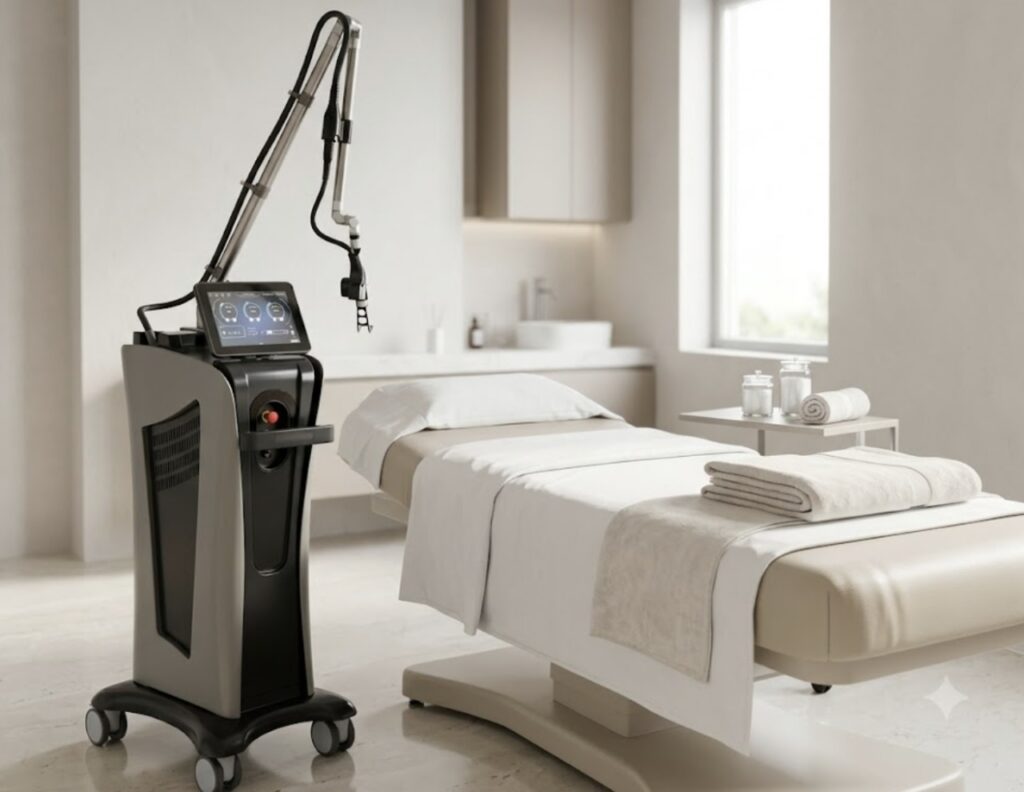
Laser resurfacing isn’t a one-size-fits-all procedure. The type of laser determines how deeply the skin is treated, how much recovery may be needed, and what kind of improvement may be realistic.
| Laser approach | How it works | Common treatment goals | General recovery profile |
| Ablative laser | Removes controlled areas of the outer skin and heats deeper tissue | More visible wrinkles, scars, sun damage, and rough texture | More redness, peeling, and healing time |
| Nonablative laser | Heats tissue beneath the surface without removing the outer layer | Mild lines, uneven tone, and gradual collagen support | Less recovery, but results may be subtler |
| Fractional laser | Creates microscopic treatment columns while leaving nearby skin untreated | Fine lines, texture, pores, scars, and sun damage | Depends on whether the laser is ablative or non-ablative |
| Fractional CO2 laser | Uses fractionated carbon dioxide energy to treat selected areas of skin | Fine lines, surface damage, and collagen remodeling | Varies by treatment depth and energy settings |
Ablative Laser Resurfacing
An ablative laser removes a controlled portion of the epidermis, the outer layer of skin. It may also heat the deeper dermis.
Carbon dioxide and erbium lasers are common ablative options. These treatments can create more visible resurfacing, but they usually involve more redness, peeling, swelling, and recovery.
Nonablative Laser Resurfacing
A nonablative laser heats tissue below the surface without removing the outer layer of skin.
This approach often causes fewer side effects and requires less recovery. Results may be more gradual, and several sessions may be recommended. Nonablative treatments tend to help mild wrinkles, uneven tone, and skin texture rather than deeper lines.
Fractional Laser Resurfacing
A fractional laser treats small columns of skin while leaving the tissue between them intact. Those untreated areas help the skin recover.
Fractional treatment can be ablative or nonablative. The word fractional describes the delivery pattern, not the strength of the laser.
LUX Injectables offers CoolPeel, a fractional CO2 laser treatment designed to target superficial skin damage while limiting excess heat to nearby tissue. This approach may appeal to clients who want visible skin renewal with a more manageable recovery period than traditional aggressive CO2 resurfacing.
The next decision is not simply which laser sounds strongest. It is the approach that fits your skin, goals, and schedule.
What Results Can You Realistically Expect?
Laser skin resurfacing for wrinkles may create a smoother, fresher complexion, but it should not be expected to erase every line.
Possible improvements include:
- Softer-looking fine lines
- Smoother skin texture
- More even-looking skin
- Reduced the appearance of sun damage
- Less noticeable pores
- A brighter surface tone
- Gradual improvement in firmness
The degree of change varies from person to person. Several factors can affect the result:
- The depth and cause of the wrinkles
- Your skin type and skin tone
- The amount of sun damage
- The type of laser used
- Treatment depth and energy settings
- The size of the treatment area
- Your natural healing response
- The number of sessions completed
- Your skincare and sun protection habits
A lighter treatment may suit someone who wants less visible downtime before work, travel, photos, or an event. A stronger treatment may provide greater correction but may also require more healing.
The most aggressive option is not automatically the best option. A thoughtful plan balances improvement, safety, and recovery.
Results also require maintenance. Facial movement continues, collagen changes with age, and new sun exposure can affect the skin. Daily sunscreen use and professional skincare can help protect skin health.
Skin tone also plays a major role in deciding how treatment should be performed.
Skin Tone and Laser Treatment Safety
Laser energy can interact with pigment, which makes skin tone an important part of treatment planning.
People with darker skin tones may have a higher risk of post-inflammatory hyperpigmentation, which causes the skin to become darker after irritation or injury. Hypopigmentation, or loss of color, can also occur.
Darker skin does not automatically rule out every laser treatment. It does require careful consideration of:
- Natural skin tone
- Current or recent tanning
- A history of pigment changes
- Melasma or other pigment conditions
- Previous laser reactions
- Medications and skincare products
- The type of laser and proposed settings
A provider may recommend conservative settings, pre-treatment skin preparation, a different laser technology, or another procedure when the risk of pigment changes is too high.
Recent tanning can also raise the risk of burns and uneven pigmentation. Clearwater clients should pay close attention to beach days, outdoor workouts, boating, and other sources of frequent sun exposure before and after treatment.
A proper skin assessment matters more than choosing a device based on social media results or before-and-after photos alone.
Once you consider skin tone and safety, the consultation can focus on matching the treatment to the actual cause of the concern.
What Happens During a Laser Resurfacing Consultation?
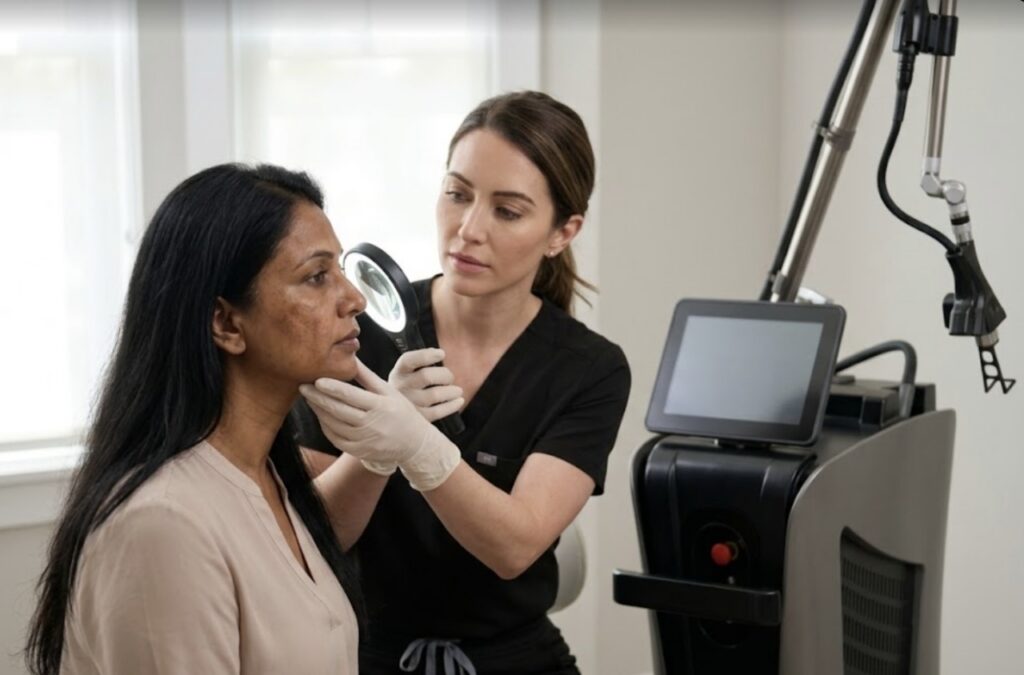
A laser consultation should involve more than choosing a treatment from a service menu. Your provider needs to understand what you want to improve and whatis causing the change in your skin.
At LUX Injectables, the consultation may include a review of:
- The location and depth of your wrinkles
- Your skin texture and degree of sun damage
- Previous cosmetic treatments
- Current medications and skincare products
- Your history of cold sores, scarring, or pigment changes
- Your preferred recovery period
- Upcoming events, travel, or photos
- The type of result you consider attractive
Jessica Manges, ARNP, has more than a decade of experience in dermatology and aesthetic medicine. Her approach centers on medical artistry, facial balance, and treatment plans shaped around the individual.
The consultation may show that laser resurfacing is a good fit for fine lines and uneven texture. It may also reveal that another treatment would address the concern more directly.
For example:
- Neurotoxin may help wrinkles caused by repeated muscle movement.
- Dermal filler may restore volume beneath a crease or fold.
- Morpheus8 or Sylfirm X may support collagen and firmness.
- NeoGen Plasma may be considered for skin quality and tightening.
- PDO threads may provide support when laxity contributes to the concern.
Some clients may benefit from a carefully timed combination plan. That does not mean every treatment should happen at once. The sequence should reflect your features, healing, priorities, and aesthetic goals.
After you select a treatment plan, recovery expectations become the next important part of the discussion.
Recovery, Side Effects, and Aftercare
Recovery depends on the type of laser, the treatment depth, and your skin’s response.
After laser resurfacing, the skin may look or feel:
- Red
- Warm
- Swollen
- Sensitive
- Dry
- Rough
- Flaky or peeling
- Temporarily darker in treated areas
A mild fractional laser treatment may cause several days of redness and a dry, sandpaper-like texture. A deeper ablative laser can involve more noticeable peeling and a longer healing period.
The American Society of Plastic Surgeons notes that recovery can vary based on the laser used and the depth of treatment. More aggressive resurfacing generally requires more healing than lighter fractional or nonablative procedures.
Possible risks include infection, acne flare, prolonged redness, cold sore reactivation, scarring, and changes in skin color. Your provider should review these risks before treatment and explain which ones are most relevant to your skin.
Aftercare may include:
- Cleansing with a gentle product
- Applying only approved moisturizers or ointments
- Avoid picking, rubbing, or exfoliating peeling skin
- Pausing retinoids, acids, and irritating products
- Avoiding saunas, intense heat, and strenuous exercise during early healing
- Keeping the treatment area out of direct sunlight
- Applying broad-spectrum sunscreen as directed
- Waiting for approval before wearing makeup
Contact the clinic if pain, swelling, drainage, blistering, or redness becomes worse instead of gradually improving.
Knowing what recovery involves can help you decide whether laser resurfacing fits your schedule and expectations.
Is Laser Resurfacing Right for Your Wrinkles?
Laser resurfacing may be worth considering when the main concerns are fine lines, rough skin texture, visible sun damage, or uneven skin tone.
You may be a potential candidate if you:
- Have realistic expectations
- Can follow aftercare instructions
- Can avoid direct sun during healing
- Understand the expected recovery
- Want to improve overall skin quality
- Do not have a medical reason that makes treatment unsuitable
Laser treatment may not be the best first choice when the main concern is deep volume loss, pronounced sagging skin, or lines caused mainly by muscle movement.
Your provider should also review your health history, medications, skin conditions, tendency to scar, history of cold sores, and previous cosmetic treatments before recommending a laser.
Online research can help you prepare for the consultation, but it cannot determine the best type of laser or settings for your skin.
The clearest answer usually comes from looking at the full face rather than at a single wrinkle in isolation.
Laser Skin Resurfacing for Wrinkles in Clearwater
Laser skin resurfacing can help soften fine lines, improve uneven skin, and refresh a complexion affected by sun exposure. It works best when the treatment matches your wrinkle pattern, skin tone, recovery preferences, and broader aesthetic goals.
It is not the right answer for every sign of aging. Lines related to movement, facial volume loss, or sagging skin may respond better to another procedure or a planned combination of treatments.
At LUX Injectables, treatment planning reflects your facial structure, skin quality, and personal sense of beauty. The goal is not to make your face look treated. It is to create a smoother, polished result that still feels natural in person and in photos.
The most useful next step is to understand how laser resurfacing compares with other options that may address your concerns.
Frequently Asked Questions
1. Does laser skin resurfacing remove wrinkles permanently?
Laser resurfacing may create long-lasting improvement, but it does not permanently stop wrinkles from forming.
The skin continues to age, facial expressions continue to create movement, and future sun exposure can cause new damage. Daily sunscreen, quality skincare, and maintenance treatments may help preserve the result.
2. How many laser skin resurfacing treatments for wrinkles will I need?
The number of treatments depends on the laser technology, treatment depth, skin condition, and type of wrinkles being treated.
A deeper ablative laser may achieve significant resurfacing in a single session. Lighter fractional or nonablative treatments often require a series. Your provider should recommend a schedule after examining your skin.
3. Is laser resurfacing better than Botox for wrinkles?
The treatments address different causes.
Laser resurfacing targets skin texture, fine surface lines, and sun damage. Botox and similar neurotoxins reduce muscle movement that contributes to expression lines such as forehead creases and crow’s feet.
Some clients may benefit from both treatments at different stages of a treatment plan.
4. Can darker skin tones have laser skin resurfacing?
Some people with darker skin tones may be candidates, but treatment requires careful device selection and settings.
Darker skin has a greater risk of pigment changes after certain lasers. An experienced provider should assess your skin type, pigment history, and goals before recommending treatment.
5. How long does it take to see results from laser skin resurfacing?
The timeline depends on the laser type and treatment intensity.
You may notice a smoother texture once the initial redness and flaking settle. Improvements related to collagen remodeling often develop over several weeks or months. Some treatments require multiple sessions before the full change becomes visible.
Create a Skin Plan Designed Around You
Wrinkle treatment should reflect more than the line you see in the mirror. Your skin tone, facial structure, volume, movement, sun exposure, and preferred recovery all influence which option makes sense.
Schedule a free consultation with Jessica at LUX Injectables in Clearwater to discuss whether laser skin resurfacing for wrinkles is right for your skin and aesthetic goals. Together, you can create a personal plan focused on a smoother, polished, and confidently refreshed look.

Jessica Manges, ARNP, is the founder and lead injector at LUX Injectables in Clearwater, Florida. With over a decade of experience in dermatology and aesthetic medicine, she specializes in PDO threads, neurotoxins, dermal fillers, and personalized treatment planning. Jessica has treated thousands of patients and has trained aesthetic professionals nationally and internationally.